
Abstract
Industrial agriculture has dominated food production for decades, promising efficiency, high yields, and lower costs. But its true costs — environmental degradation, farmer dependency, declining resilience, and lost food sovereignty — are becoming impossible to ignore. This article examines the ecological, economic, and productive limits of the industrial model and explores regenerative, localized alternatives that offer a more sustainable path forward — especially in Mediterranean contexts like Greece. Drawing on both research and hands-on agricultural experience, it argues for a rethinking of how we grow food, and for whom.
Introduction
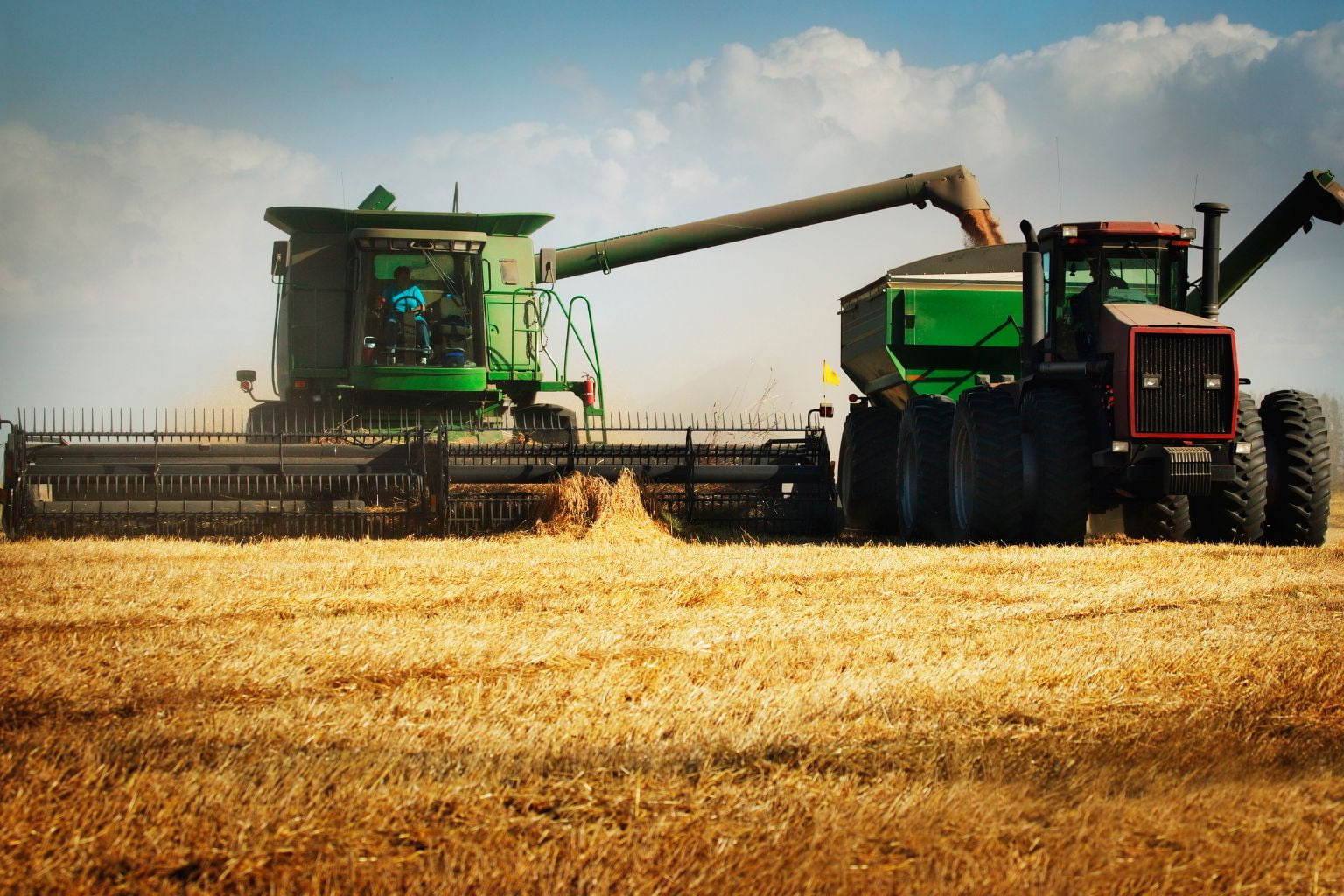
For decades, industrial agriculture has shaped the dominant model of food production. It relies on intensive cultivation, the widespread use of chemical inputs (such as fertilizers and pesticides), and the large-scale monoculture of a small number of high-yield crop varieties. This system has delivered remarkable short-term results: higher yields, lower unit costs, and a steady supply of food to meet the demands of a growing global population.
However, the cracks in this model are becoming increasingly visible. Climate change, the depletion of natural resources such as soil and water, and a growing dependence on a limited set of crop varieties and technologies all raise serious questions about its long-term sustainability. Industrial agriculture, once seen as the solution to feeding the world, is beginning to look more and more like part of the problem.
1. Environmental Limits
Industrial agriculture is built on the relentless intensification of natural resource use. What once appeared efficient and productive is now revealing profound environmental limitations.
Depletion of Natural Resources
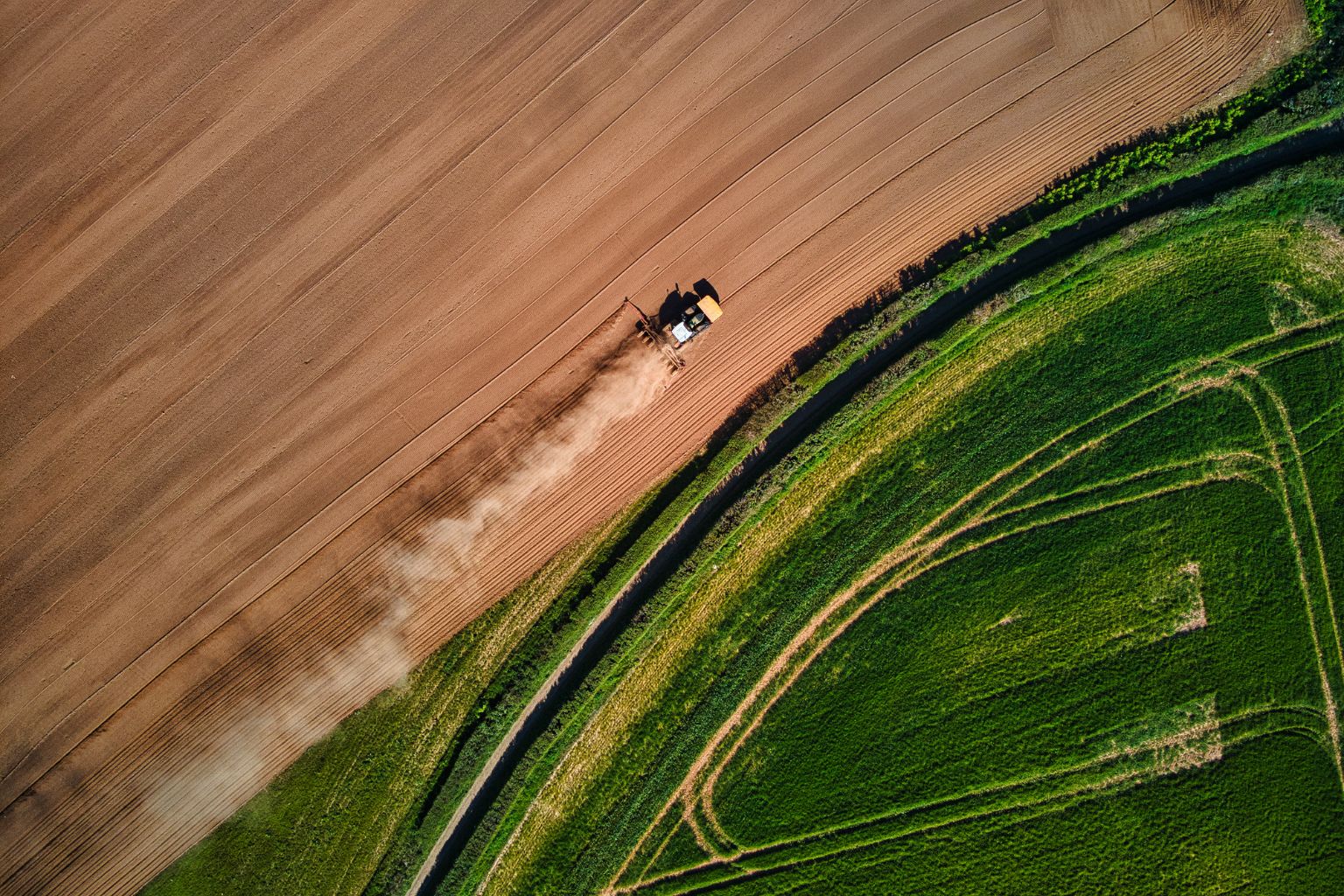
Soil — the foundation of agricultural production — is being exhausted through continuous cultivation without sufficient rest or replenishment. Monoculture, combined with heavy mechanization and chemical fertilizers, leads to the loss of organic matter and long-term soil degradation. Fertile ground becomes less productive, more compacted, and biologically lifeless.
Water, particularly in Mediterranean countries like Greece, is becoming increasingly scarce. Intensive irrigation depletes aquifers, while pesticide and fertilizer runoff contaminate both surface and groundwater. The ecological cost is mounting — and often invisible until it’s too late.
Soil and Water Pollution
Although agrochemicals may temporarily increase yields, their long-term effects are disruptive. Toxic residues accumulate in the soil, affecting microbial life and crop health. Runoff carries these substances into rivers and lakes, with damaging consequences for ecosystems and human health.
Declining Biodiversity
The emphasis on a narrow set of “industrial” crop varieties and the destruction of natural habitats has triggered a steep decline in both agricultural and wild biodiversity. Pollinators, beneficial insects, and soil organisms are disappearing — weakening the resilience of entire agroecosystems and increasing their vulnerability to pests, diseases, and climate extremes.
In its pursuit of maximum yield, industrial agriculture pushes ecosystems beyond their limits. This is no longer just an environmental concern — it is a direct constraint on the future of agricultural productivity itself.
2. Economic and Social Impacts
The consequences of industrial agriculture extend beyond the environment. They also shape the economic and social conditions under which farmers operate — often in ways that undermine resilience and fairness.
Farmer Dependency on a Few Corporations
Modern agriculture has become increasingly reliant on a handful of dominant companies that control key agricultural inputs: seeds, fertilizers, pesticides, and even advisory services. Farmers are often locked into bundled “packages” of inputs and protocols, leaving them with limited choices and growing dependency.
Traditional, locally adapted crop varieties have been sidelined, while farmers’ knowledge and experience are gradually replaced by standardized, external instructions — and commercial obligations.
I’ve never fully understood why farmers are required to buy certified seeds every season.
Pressure on Small and Medium-Scale Farms
The logic of scale and specialization favors large agribusiness operations. Small and medium-sized farms — which still dominate most of the world, including many parts of rural Greece — struggle to compete. Input costs rise, while producer prices often stagnate. To stay in the game, many farmers are forced to invest in machinery and technology they can barely afford, further widening economic disparities.
Debt and Financial Insecurity
In trying to meet the demands of the system, many farmers fall into debt. Instead of providing economic security, agriculture becomes a source of financial stress and uncertainty — especially for younger farmers without established infrastructure or capital. The system promises growth and profit, but often delivers consolidation, inequality, and instability.
Food Sovereignty at Risk
The COVID-19 pandemic and the war in Ukraine exposed how fragile global supply chains really are — and how vital it is for countries to maintain a degree of food sovereignty. Industrial agriculture prioritizes low-cost production, often relocating crops to where land and labor are cheapest, regardless of local capacity. This has led to the decline of entire domestic sectors. In Greece, for example, soft wheat and pulses — once staples of national diets and crop rotations — are now largely imported.
This dependency is not just an economic vulnerability. In times of crisis, it becomes a threat to food security and social stability.
Strengthening local production through smaller, more diversified farms — using locally adapted varieties — is key to restoring meaningful food autonomy. It’s not about rejecting trade or technology, but about rebuilding systems that are more resilient, flexible, and regionally grounded.
3. The Productive Dead End
Beneath the surface of industrial agriculture’s apparent success lies a growing contradiction — a system that demands more and more to produce just enough.
Soil Depletion and Declining Yields
Continuous cropping without crop rotation, the frequent use of heavy machinery, and the over-application of chemical inputs have taken a toll on soil health. Organic matter diminishes, microbial life collapses, and fertility declines. Over time, greater intervention is needed just to maintain the same yield — and even that becomes less effective.
Resistant Pests, Diseases, and Weeds
The repeated use of the same active ingredients in crop protection exerts strong selection pressure on biological threats. As a result, weeds, insects, and pathogens evolve resistance. The tools that once worked lose their impact, requiring ever-stronger chemicals and higher doses — feeding a costly and unsustainable cycle of dependence.
Lower Resilience to Environmental Stress
Crops bred for high yields under stable, optimal conditions — such as controlled irrigation and mild climates — are often poorly equipped to handle extremes. Unlike traditional varieties that evolved under diverse pressures, modern hybrids tend to have low genetic variability. This makes them more vulnerable to heatwaves, droughts, frosts, and erratic weather — all of which are becoming more frequent.
In a climate of growing uncertainty, this kind of specialization becomes a weakness rather than a strength. The promise of “producing more” proves increasingly fragile. In trying to maximize output, we risk losing both consistency and quality.
4. Is There an Alternative?
As the limits of industrial agriculture become increasingly apparent, new approaches are emerging — based not on domination of nature, but on cooperation with it. These alternatives aim for less dependence on external inputs, greater alignment with local conditions, and long-term ecological balance.
Regenerative Agriculture
Regenerative farming goes beyond simply sustaining resources — it seeks to improve them. Through techniques such as composting, cover cropping, and reduced tillage, it works to restore soil fertility, enhance biodiversity, and reverse the damage caused by decades of extractive practices. It treats the farm not as a factory, but as a living system.
Local Varieties, Agroecology, and Low-Input Technology
Locally adapted varieties, often overlooked in modern seed markets, can offer more stability and resilience under regional climate conditions. Agroecology — the integration of ecological principles into farming systems — builds diversity into the fields, not just the marketplace. This makes farms less vulnerable to shocks, and less reliant on expensive inputs.
Technology still has a role to play, but a different one: not to impose uniformity, but to support decision-making and resource efficiency. Precision irrigation, soil analysis tools, and sensors can help optimize inputs without overwhelming the system — or the environment.
Diversification and New Business Models
Crop rotation, uncultivated strips, cover cropping, and mixed farming systems help reduce weed and pest pressure while supporting long-term soil health. Beyond the field, new economic models — such as cooperatives, short supply chains, and integrated small-scale processing — offer farmers better margins and greater independence.
These alternatives do not represent a romantic return to the past. They are a redesign of the future — informed by science, driven by local knowledge, and built on respect for the limits and potential of living systems.
Why We Need a New Direction
As an agronomist working closely with soil, varieties, and the people who make a living from agriculture, I see firsthand that the industrial model is no longer viable — not just because it exhausts nature, but because it wears down the farmer: physically, economically, and emotionally.
Agriculture needs rethinking — not in theory, but in practice. From how we choose varieties, to how we collaborate with other growers, to the technologies we adopt, we must shift toward a model that is more flexible, regionally adapted, and respectful of natural and human limits.
The relentless pursuit of cheaper production must give way to a different logic: delivering better-quality food, produced more responsibly, and sold at fair prices.
A Different Path for Greece
Greece — and especially the vegetable sector — holds unique opportunities in this shift.
- Our geography and climate support diverse, small-scale cropping systems.
- Traditional varieties, often well adapted to local stressors, can serve as the foundation for more resilient and distinctive production.
- Our proximity to markets, the country’s tourism flow, and rising consumer demand for fresh, quality produce open up space for new entrepreneurial models — from direct-to-consumer sales to short supply chains.
Agriculture is not just about producing more. It’s about nourishing people, supporting rural livelihoods, and keeping landscapes alive. If done with care, it can be both economically viable and ecologically sound.