
Abstract
While robotics and AI grab headlines, the real revolution in agriculture happens elsewhere — in healthier soils, resilient crops, and smarter genetic choices. This article reveals how true innovation lies not in flashy tech, but in empowering farmers to build stronger, more sustainable systems for the future.
Intoduction
By 2050, the world will need to produce 56% more food to meet global demand. Yet, as the pandemic of 2020–2023 reminded us, supply chains are fragile, and food security is not guaranteed.
Many look toward a new technological revolution to address this challenge—but where does this revolution truly lie?
Is it in autonomous machines and AI-driven farms, or is the key hidden within the very essence of agricultural production itself?
Robots and Artificial Intelligence (AI)
Some believe that the agricultural revolution will come from robots: planting, weeding, harvesting. With the help of AI, they become more “intelligent” and adaptable. They are useful mainly when there is a shortage of labor, such as in Western countries, but their high cost and maintenance makes them accessible only to large or specialized units.
In most countries, where labor is cheaper, robotics is not economically viable. In conclusion, although impressive, robots, with or without AI, do not bring about radical change, they merely improve productivity under specific conditions.
Telemetry and Artificial Intelligence
Telemetry—through sensors, drones, or satellites—provides real-time data on soil moisture, plant health, and cultivation conditions. AI has enhanced their use: it analyzes large volumes of data, predicts problems, and suggests targeted interventions, such as localized irrigation or fertilization.
However, even the most advanced technology cannot compensate for poor soil, lack of water, or unsuitable plant stock. Telemetry is an extremely useful tool in already organized production but does not constitute a revolution on its own.
Soilless Cultivation
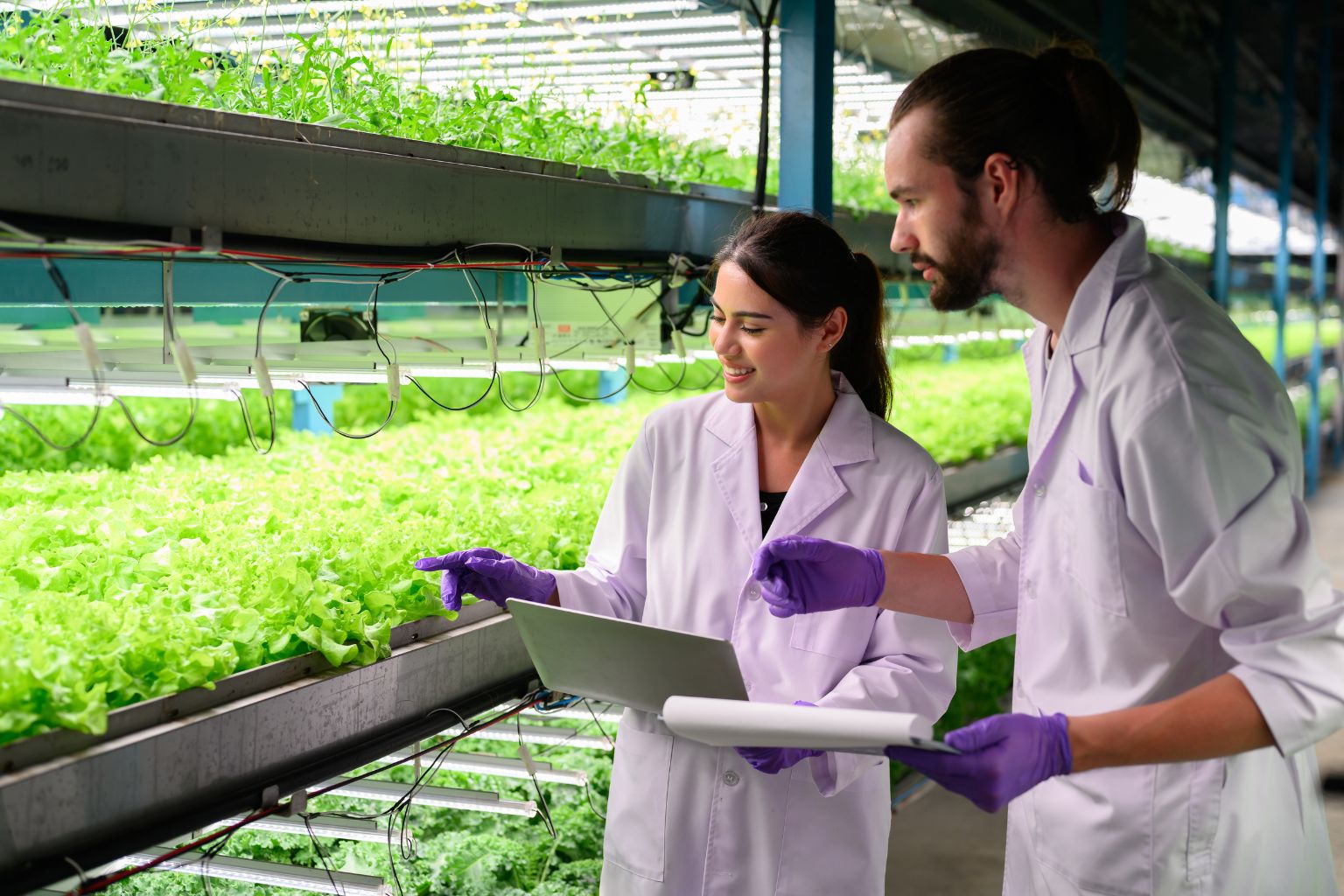
Soilless cultivation, especially in closed systems, impresses due to fully controlled production (light, water, temperature). With AI support, microclimate management and energy efficiency improve.
However, it concerns only a few products (lettuce, arugula, herbs) and makes sense mainly in northern countries or deserts. It is not a large-scale solution for global agricultural production.
Fundamental Production Factors
To find where the real revolution in agriculture lies, we must examine the three fundamental pillars of production:
It is in these areas—not in flashy machines—that the most promising technologies intervene.
Soil
Soil is not just a substrate: it is a living system with microbial and chemical complexity that significantly affects production. Beyond N-P-K, plants need at least 10 trace elements for healthy growth. The quality of plant and animal foods largely depends on these.
Soil degradation is a global phenomenon. If it continues, no technology will be able to compensate. AI can help by identifying deficiencies, suggesting targeted interventions, and monitoring soil evolution. However, it is a tool, not a solution.
Sustainable soil management is perhaps the most critical prerequisite for the future of agricultural production.
Environment
The environment critically influences production: water, temperature, light, humidity.
Some factors can be regulated—e.g., irrigation or protection from extreme weather events.
AI contributes with weather forecasting, microclimate analysis, and guidance for proper planting time or stress management.
However, the best solution is selecting varieties adapted to local conditions.
Artificial interventions have costs and limitations; nature is still more “economical” when properly used.
Genetic Background of Agricultural Plants and Animals
The DNA of plants and animals is the most adjustable factor in agricultural production.
Today, genetic design concerns not only the farmer but also the end consumer.
AI enhances genetic improvement with genome analysis, behavior prediction, and identification of the most suitable varieties for each region.
Where Can We Find Revolutionary Technology?
The conclusion from our analysis is clear:
If we are searching for truly revolutionary technologies in agriculture, we will not find them in robots, telemetry, or soil-less production under fully controlled conditions.
We will seek them—and are already finding them—in the factors that influence the fundamental components of production. Some of the most promising innovations today are found in these areas.
🌱 Soil
Continuous cultivation and intensive use of fertilizers and water under industrial conditions lead to the degradation of agricultural soil. This has driven innovations such as:
🌤️ Environment
Despite extreme climate challenges, technology helps us to:
🧬 Genetic Background
The DNA of plants and animals is the most influential factor of agricultural production.
Through the selection and improvement of varieties and breeds, we achieve disease resistance, climate resistance, nutritional value and greater shelf life.
Today, genetic design is not only about the farmer, but also about the end consumer.
AI boosts genetic improvement by analyzing genomes, predicting behavior, and identifying the most suitable varieties for each region.
Technology is truly revolutionary when it alters the essence of production, not just when it automates processes.
Conclusion: What Should the Farmer Retain?
Revolutionary technology in agriculture is not found in fancy machinery. It lies in choosing the right seed, hardy variety, healthy breed of animals, and long-term care of the soil.
The modern farmer who wants to be ahead of the curve doesn’t have to chase every new gadget. He needs to invest in plant and animal capital adapted to the environment, to respect its soil and to know his produce.
AI and technological tools can enhance his knowledge, not replace it. The farmer’s crisis is still the most critical tool of agricultural technology.
The combination of traditional knowledge with modern tools is, perhaps, the most revolutionary development of agriculture.